Fishing provides that connection with the whole living world. It gives you the opportunity of being totally immersed, turning back into yourself in a good way. A form of meditation, some form of communion with levels of yourself that are deeper than the ordinary self.


"Ted Hughes"

Showing posts with label Turkey Hunters. Show all posts

Tuesday, 19 August 2014

Basic Turkey Hunting Tips


Turkey hunting is challenging, exciting and in some cases becomes addictive. Turkey’s senses are extremely keen - even your heart pounding can make the turkey vanish like a puff of smoke.


Basic help in turkey hunting

Before you can hunt a wild turkey, you have got to find them. The easiest way to do this is by locating the general areas of the turkey’s habitat.

- Get a good map of the area you plan to hunt.


- Wave or use a locator call like an owl hooter or crow call or even a turkey call to try to get a response. When you hear a gobbler, mark the locator map.

- Scout for the best location on foot. Check for signs of the bird’s scratches, droppings of feathers. This information can help you locate some areas. Check along mud holes, creek banks, pastures, log roads, fencerows etc. as many trips as possible.

- Never try to get too close to the turkey. A turkey’s eyes, ears and awareness are many times better than yours.


- Choose a tree that is wider than your shoulders. This will protect you from other hunters that might come behind you and mistakenly assume that you are a real turkey.

- Camouflage is almost a must to avoid being seen. Wild turkeys have such keen vision. Many turkey hunters usually wear camo suit, cap, facemask, gloves, vest with many pockets to carry calls and maybe a snack. 

Also do not forget to wear dark colored socks so that when you sit down, they would not show you. But the main thing to remember: your movement is more important; regardless of how well you are camouflage. It doesn’t make you completely visible. Even though you are camouflage, you are still an unnatural form in the woods. 

Movement is the greatest enemy of the turkey hunter. A turkey can detect you 10 times faster than you sense the turkey.

 The best shotgun and ammunition for turkey hunting is the combination that delivers a dense, hard-hitting pattern at 40-45 yards. Practice with a target that portrays a turkey’s vital head and neck area. 

These parts are the ones that you should be shooting. You should have at least 8-10 pellets in the vital area at 40 yards.

• Do not hide so well that you cannot see what is happening. Blinds are useful for the turkey hunter, but when constructed so well that vision is obstructed, it is no longer a blind, and it is a hiding place, as beneficial to the turkey as it is to you.

 Cease from using gobbler calls. 

Although this call can sometimes be productive, it is also very dangerous. In areas where many hunters are located,

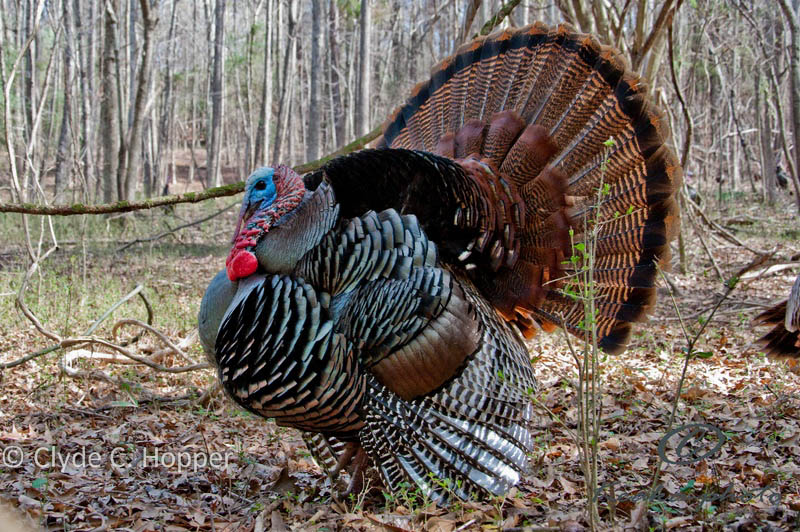
Basic Turkey Hunting Information: Knowing Your Prey And Their Behavior

Fall was the preferred time to hunt wild turkeys by most of the famous old time turkey hunters and is still favored by many traditionalists. These turkey hunting experts liked it best because it was a lot more difficult and therefore more rewarding to call in an old turkey in the fall rather than the spring.

Gobblers in the late summer, fall and winter become very solitary animals with very little interest in females. They do, however, gobble in the fall and there have been a few mornings in October and November that you would think that it was spring with the huge number of gobblers around. 

On rare occasions, gobblers will even come in strutting and gobbling just like it was spring. More likely though, you won't even notice a fall turkey reacting to your calls. He will just appear silently, looking for companionship with another long beard but not really caring whether he finds it or not. This is a real fall gobbler.


The fall season has regained its popularity recently with the ever-increasing numbers of turkeys. Over 40 states now host fall turkey seasons and more and more hunters are discovering the excitement of hunting in the fall. Turkey hunting is a pleasurable and enjoyable sport people are starting to like.

This sport requires seperate permits for hunters during the fall, along with the applications for spring hunting permits. Turkey hunters are allowed only to take only one wild turkey of either sex during that fall season each day.

Turkeys are usually found in open, mixed hardwood and pine 

Others are scattered in brush land. Others prefer to roost in trees larger than the surrounding vegetation and will often choose place to stay on sites facing slopes where they can shelter from the existing strong wind. They will use open fields and meadows as feeding and boasting sites and wooded areas are roosting sites. If few or no roosting sites are available, the turkey may leave the place and not use it.

Basic Turkey Characteristics

Turkeys’ ears are also placed on both sides of their heads. And because they have no outer ear to develop the sound in one direction, they hear sounds all the way around them. Sounds received by only one ear can help the turkey find out which direction the sound comes out but not any indication of distance. 

Turkeys turn around to be more alert.

With a highly developed sense of smell, they can determine the direction of danger by scent and wind direction. The clever beasts generally flee away from the danger, not toward it. Besides their sense of smell, they rely heavily on both their eyes and ears to determine the direction of danger before they run away from it.

A Few Hints For Turkey Hunters

If you are a novice or intermediate turkey hunter, you might have discovered that it's harder than it appears. The turkey out in the wild, even with it's name, is a difficult bird for a person to pursue and hunt. It may have a humorous name, but the turkey has a surprising intelligence level and sharp eyesight. It can take a long time for a hunter to improve the qualifications it takes to close in on and creep up on a turkey. But you can really increase your chances in turkey hunting by having the advantage with an effective camouflage. This cuts down on  visibility for the turkeys and allows the hunter to get in close enough to take a shot.

For the hunter on the field, the most effective type of camouflage available is the ghillie suit, which was developed over a hundred and fifty years ago in the highlands of Scotland. It is a suit that you can place over your normal clothes to significantly alter your form and significantly lower your visibility to animals out in the wild. Strands of fabric like jute or burlap hang down all over the suit, making it extremely hard for game to spot you. This makes the human  blend in to their  surroundings by blending the human pattern and  form.

Ghillie camo can be so efficient that it is possible for game to come right up to a hunter that is being really still.

A turkey's fine vision is bewildered when human forms are broken up with the help of a ghillie suit. In order for a person to successfully hunt a turkey, they must get within a range to have a  kill shot to stop an injured turkey from running off in the forests. A person stalking the turkeys can cut this distance between themselves and a gang of turkeys by moving slowly and staying low to the ground.

It is best to try and locate turkeys in the evening as they are getting ready to roost. Stalking a turkey is extremely difficult.

In fact, there's a good possibility it's already seen you if you spot a turkey  in the field. It is hard to stalk them because they not only can see a large distance but  have a broad range to their eyesight. A gang of turkeys will often face each other in circles to see all sides of the field and prevent other animals from sneaking up behind them.

Staying in a single location and waiting in a heavily populated turkey area can be a somewhat slow process that takes a lot of time being very still.

And then there's  the chance that before you get an opportunity to get a good shot the gang of wary turkeys will spot you the moment you move and be on the run. It may take patience and ingenuity, but it is possible to get within range of a group of turkeys. With a good gun, a ghillie suit, and an effective turkey call you could get those turkeys once and for all.